Face & Skin
Everything You Need to Know About Opus Plasma Skin Resurfacing
Skin resurfacing has been one of the most reliable tools in aesthetic medicine for decades. The idea is straightforward: create controlled micro-injuries in the skin’s surface, and the body’s wound-healing response rebuilds it with fresher, tighter tissue. Fractional CO2 lasers set the standard for this approach for years, delivering impressive results for wrinkles, scars, and sun damage. But the trade-off was always steep. Recovery from traditional ablative resurfacing could mean a week or more of redness, swelling, and social downtime that many people simply could not accommodate.
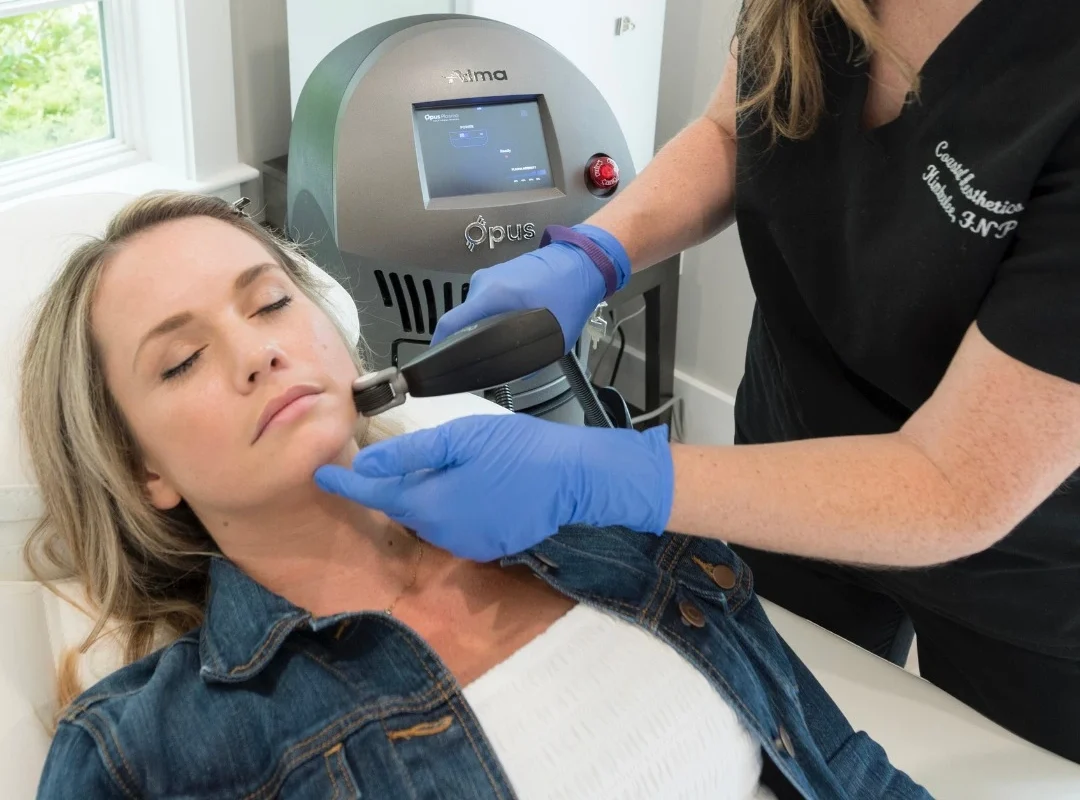
Opus Plasma, developed by Alma Lasers, represents a different way of achieving comparable outcomes. It is the first fractional skin resurfacing device to combine unipolar radiofrequency energy with microplasma technology, and the practical result is a treatment that rivals aggressive ablative lasers while cutting recovery time roughly in half. At Coastal Aesthetics, it has become one of our most requested treatments for clients across southern Maine and the New Hampshire Seacoast who want visible skin improvement without a prolonged recovery window.
How does Opus Plasma actually work?
Opus Plasma operates on a principle called fractional microplasma radiofrequency (FMRT). The device contains an array of metal pins that are supercharged with high-voltage unipolar radiofrequency energy. When these pins are brought close to the skin’s surface, the energy reacts with atmospheric gases in the narrow gap between the tip and the tissue. This interaction ionizes the gas and creates microplasma, a state of matter that carries intense but precisely controlled thermal energy.
That microplasma creates a grid of tiny thermal injuries across the treatment area. Each micro-injury is surrounded by a zone of untouched, healthy skin. This is the fractional concept: by leaving intact tissue between treated spots, the body has a ready reservoir of cells to drive rapid healing. The thermal energy penetrates into the dermis, where it triggers a cascade of biological responses. Fibroblasts, the cells responsible for producing collagen and elastin, are activated. Over the weeks following treatment, these cells lay down new structural proteins that tighten, smooth, and rebuild the skin from within.
The mechanism is similar in concept to what happens during RF microneedling in York, ME, where radiofrequency energy is delivered through fine needles to stimulate collagen at controlled depths. The key difference with Opus Plasma is that the energy delivery happens through plasma discharge rather than physical needle penetration, which changes the nature of the surface injury and the resulting recovery profile.
What skin concerns does Opus Plasma treat?
Opus Plasma is cleared for a broad range of skin concerns across the face, neck, and body. The treatment’s versatility comes from its interchangeable tips and adjustable energy settings, which allow providers to calibrate the intensity and depth of treatment for each area and each concern.
Common treatment targets include fine lines and wrinkles (particularly around the eyes and mouth), uneven skin texture and tone, acne scarring, age spots and sun damage, skin laxity on the face and neck, and stretch marks. Clients dealing with hyperpigmentation or scarring often find Opus Plasma particularly well-suited to their needs because the plasma energy sublimates the outermost skin layers without the chromophore-dependent targeting that limits some laser systems on darker skin tones.
The Colibri applicator for periorbital and perioral areas Coastal Aesthetics also offers the Colibri applicator, a specialized Opus Plasma tip designed for the delicate skin around the eyes and mouth. The Colibri delivers energy through a precisely shaped tip to create controlled micro-perforations in these hard-to-reach areas, providing a nonsurgical option for crow’s feet, under-eye laxity, and vertical lip lines. It also addresses xanthelasma, the yellowish plaques that can develop near the inner eyelid. |
How does Opus Plasma compare to other resurfacing treatments?
One of the most frequent questions clients ask is how Opus Plasma stacks up against other skin resurfacing options. The comparison is particularly relevant because Coastal Aesthetics offers multiple resurfacing modalities, including the Alma Hybrid CO2 laser, chemical peels, and microneedling. The right choice depends on the severity of the concern, your tolerance for downtime, and the specific results you want to achieve.
Factor | Opus Plasma | Fractional CO2 | RF microneedling | Chemical peel |
Energy type | Unipolar RF + microplasma | CO2 laser ablation | RF via microneedles | Chemical exfoliation |
Typical downtime | 1–3 days | 5–7+ days | 1–3 days | 1–7 days (varies by depth) |
Sessions for optimal results | 2–3 | 1–2 | 3–4 | 3–6 |
Pain level (patient-reported) | Mild (2–3/10) | Moderate to high | Moderate | Mild to moderate |
Safe for darker skin tones? | Yes | Higher risk of PIH | Yes | Depends on peel type |
Best for | Texture, scars, mild laxity, periorbital lines | Deep wrinkles, severe sun damage | Acne scars, pore size, mild laxity | Surface texture, mild discoloration |
A randomized split-face clinical study published in Dermatologic Surgery found that fractional microplasma radiofrequency produced results comparable to fractional CO2 laser for treating atrophic acne scars, with a 56.4% improvement in scar scores after three sessions. The CO2 side showed 59.2% improvement. The difference between the two was not statistically significant, but the microplasma RF side was associated with less pronounced post-treatment skin reactions (Kono et al., 2013).
What does the treatment feel like?
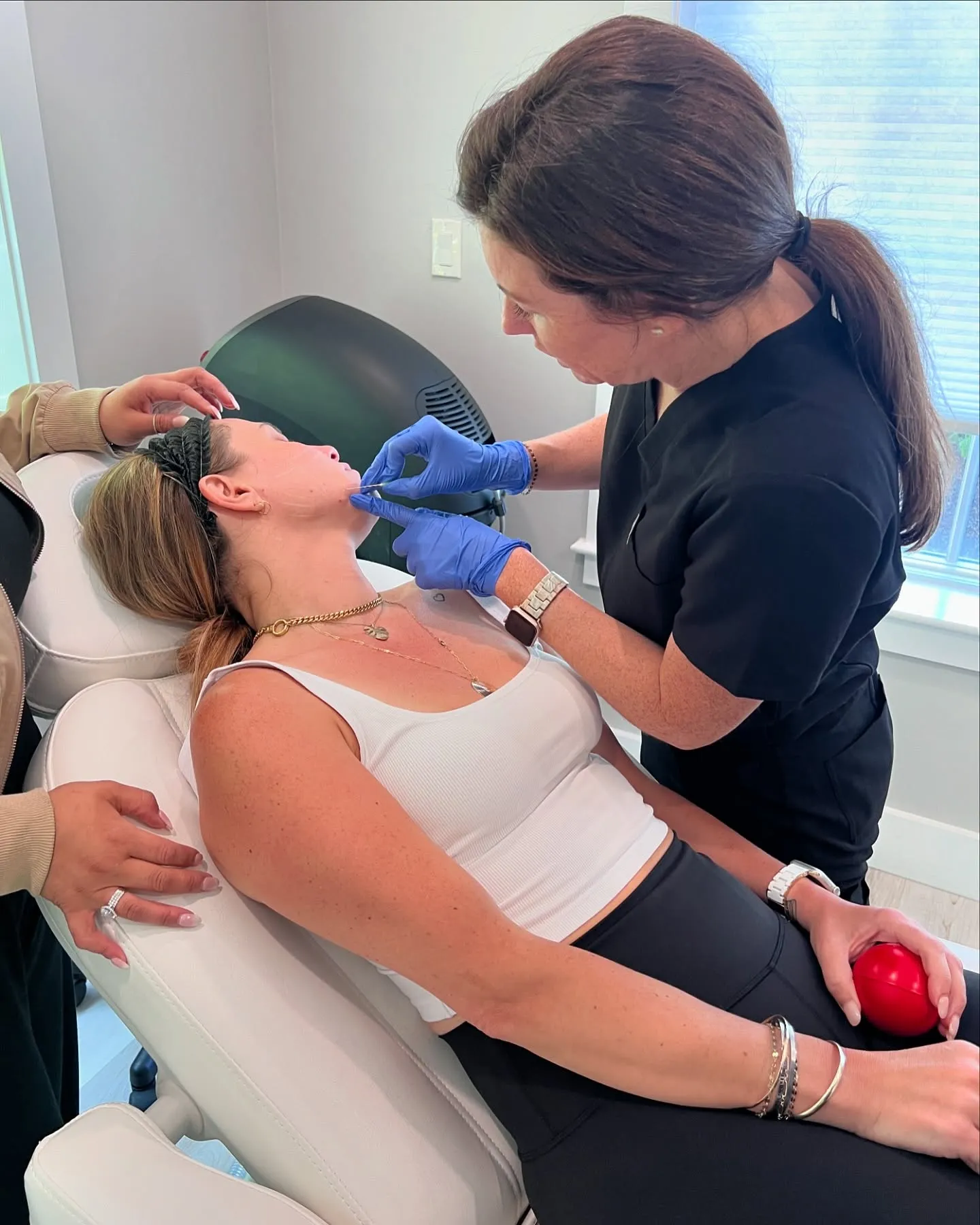
A full-face Opus Plasma session takes approximately 15 to 30 minutes depending on the areas being treated. Before the procedure, a topical numbing cream is applied and left on for roughly 20 to 30 minutes. Once the skin is prepped, your provider moves the handpiece across the treatment area in systematic passes. Most clients describe the sensation as a warm prickling feeling. Pain ratings typically fall between 2 and 3 on a 10-point scale, which is considerably lower than what clients report after fractional CO2 sessions.
Immediately after treatment, the skin appears pink to red, similar to a moderate sunburn. Tiny micro-dots may be visible on the skin’s surface where the plasma energy was delivered. These are the fractional treatment zones, and they are a normal part of the process.
What does recovery look like?
Recovery from Opus Plasma is one of the treatment’s most compelling advantages. Most clients experience mild to moderate redness for 24 to 72 hours. Minor swelling in the first day is common but typically resolves quickly. A sandy, rough texture may develop as the micro-treated zones exfoliate over the first few days. By day three to five, the majority of visible healing is complete and makeup can usually be applied.
Compare this to traditional fractional CO2 resurfacing, where clients often deal with five to seven days of significant redness, oozing, and peeling before feeling comfortable in social or professional settings. For clients in York, Portland, Kittery, and Portsmouth who cannot take a full week away from their routines, the shorter recovery window is a practical advantage that matters.
Post-treatment care basics Keep the treatment area moisturized with the products your provider recommends. Avoid direct sun exposure and apply broad-spectrum SPF 30 or higher once the skin has healed enough for sunscreen application. Do not pick at any flaking or peeling skin. Avoid retinoids, exfoliating acids, and harsh cleansers until your provider gives you the go-ahead, typically after five to seven days. |
When do results become visible?
One of the more satisfying aspects of Opus Plasma is that improvement is visible after the very first session. Once the initial redness and micro-exfoliation clear, most clients notice smoother skin texture and a more even tone within the first two weeks. But the real transformation happens beneath the surface over the following months.
Collagen remodeling is a gradual biological process. New collagen fibers continue to form for approximately three to six months after each treatment session. This means skin continues to tighten and improve in texture long after the surface has fully healed. Clients who complete the recommended two to three sessions, spaced roughly four to six weeks apart, see the most significant cumulative improvement.
A pilot study published in the Journal of Cosmetic and Laser Therapy found that acne scars showed marked improvement after two to four fractional micro-plasma RF treatments, while facial wrinkles (rhytids) demonstrated reduced depth after just two sessions. All participants tolerated the treatment well, with only transient erythema and minimal downtime reported (Halachmi et al., 2010).
Who is a good candidate for Opus Plasma?
Opus Plasma is approved for use on all Fitzpatrick skin types, which makes it accessible to a wider range of clients than many traditional laser resurfacing platforms. This is a meaningful distinction. Older fractional CO2 systems carried a higher risk of post-inflammatory hyperpigmentation (PIH) in clients with medium to dark skin tones, which limited their use in a significant portion of the population. Because Opus Plasma’s energy delivery mechanism does not depend on targeting a specific chromophore (like melanin), it can be used safely across the full spectrum of skin tones.
The ideal candidate is someone in generally good health who wants to address texture irregularities, early signs of aging, mild to moderate skin laxity, or scarring. Smokers and clients with active skin infections or breakouts in the treatment area should wait until those conditions are resolved before scheduling a session. During your consultation at Coastal Aesthetics, the team will evaluate your skin, discuss your goals, and determine whether Opus Plasma or another treatment, such as our DENSITY RF skin tightening treatment in York, ME or Harmony XL Pro laser platform, is the best match for your concerns.
Is Opus Plasma the same as microneedling?
Opus Plasma and microneedling treatments in York, ME share a conceptual foundation: both create controlled micro-injuries to stimulate the skin’s healing response and boost collagen production. But the mechanisms are fundamentally different.
- Traditional microneedling uses physical needles to puncture the skin at controlled depths. The mechanical injury alone triggers collagen production, and when combined with growth factors like PRP, results can be significant for fine lines and mild scarring.
- Opus Plasma delivers energy via microplasma discharge, creating thermal zones rather than physical punctures. The addition of radiofrequency energy means the thermal effect reaches deeper into the dermis and generates a stronger collagen-remodeling response per session, which is why fewer total sessions are typically needed.
For clients with mild skin concerns, traditional microneedling may be sufficient and more cost-effective. For moderate texture issues, scarring, or laxity, Opus Plasma generally delivers more substantial results in fewer sessions.
How many sessions are recommended?
Most clients achieve optimal results after two to three Opus Plasma sessions spaced four to six weeks apart. This spacing allows the skin to complete its initial healing phase and gives early collagen remodeling time to begin before the next round of treatment.
Results are visible after each individual session, which is one of the treatment’s most appealing qualities. Clients who want the best long-term outcome, particularly for acne scarring or more advanced textural concerns, benefit from completing the full recommended series. After that, periodic maintenance sessions (typically once or twice per year) help sustain the improvements and counteract the gradual effects of aging and environmental exposure.
Can Opus Plasma be done year-round?
Yes. Opus Plasma is safe for use in all seasons. Traditional ablative laser treatments are often recommended during fall and winter months because the post-treatment skin is highly photosensitive and vulnerable to UV-induced hyperpigmentation. While sun protection remains important after any resurfacing procedure, Opus Plasma’s gentler surface impact and broader skin-type compatibility make it a practical option even during the warmer months along the Maine and New Hampshire coast.
That said, your provider will still advise minimizing direct sun exposure for a period after treatment. Consistent use of SPF 30 or higher is essential during the healing window regardless of the season.
Frequently asked questions
The treatment itself typically takes 15 to 30 minutes per area. Including numbing cream application time, plan for approximately 60 to 90 minutes for a full-face session at the clinic.
Avoid retinoids, chemical exfoliants, and excessive sun exposure for about a week before your appointment. If you have a history of cold sores, let your provider know, as antiviral medication may be recommended as a precaution.
Yes. Many clients incorporate Opus Plasma into a broader skin-care strategy that includes treatments like Diamond Glow facials for surface-level exfoliation and hydration, or wrinkle relaxers and dermal fillers for volume and expression-line concerns. Your provider will help you sequence these treatments appropriately so each one complements the others.
Yes. Opus Plasma is effective on the neck, décolletage, and body areas including stretch marks. Clients concerned about loose skin on the face and neck often see meaningful tightening and texture improvement with Opus Plasma in these areas.
Start your skin resurfacing plan at Coastal Aesthetics
Opus Plasma occupies a valuable position in the spectrum of skin resurfacing treatments. It delivers results that rival ablative CO2 lasers, works safely across all skin types, recovers in days rather than weeks, and produces visible improvement from the very first session. For clients across York, Portland, Kittery, and Portsmouth who want meaningful skin rejuvenation with a practical recovery timeline, it is one of the most effective options available.
At Coastal Aesthetics, we will evaluate your skin, discuss what you want to achieve, and recommend the treatment approach that makes the most sense for your goals. Whether Opus Plasma is the right standalone treatment or part of a broader plan, we build every recommendation around your individual needs.
Schedule your consultation today and let us help you get started.
References
- Halachmi S, Orenstein A, Meneghel T, Lapidoth M. A novel fractional micro-plasma radio-frequency technology for the treatment of facial scars and rhytids: a pilot study. Journal of Cosmetic and Laser Therapy. 2010;12(5):208–212. PMC2956449
- Kono T, Chan HH, Groff WF, Manstein D. Prospective comparison of fractional microplasma radio frequency technology and carbon dioxide fractional laser for the treatment of atrophic acne scars: a randomized split-face clinical study. Dermatologic Surgery. 2013;39(4):559–566. PubMed 23379344
- Simmons BJ, Bray FN, Falto-Aizpurua LA, Nouri K. Radiofrequency-based treatments for facial rejuvenation: a systematic review of efficacy, safety, and patient-centered outcomes. PMC. 2025. PMC12715571

Services Pricing Guide
Download our exclusive Coastal Aesthetics Pricing Guide and learn more about our service menu and pricing