Face & Skin
What Is Collagen Banking, and How Can DENSITY RF Help?

Collagen banking has become a regular topic in aesthetic consultations, and the idea behind it is straightforward. You build up your skin’s collagen supply while your body still responds well to stimulation, so there is more structural support in reserve as the natural decline of aging continues. Patients who follow this approach tend to spend their thirties and forties maintaining firmness instead of trying to win it back later.
At Coastal Aesthetics in York, Maine, DENSITY RF skin tightening in York, ME is one of the tools we use for exactly that purpose. The device heats the dermis with two forms of radiofrequency energy in a single session, prompting the skin to produce new collagen and elastin without needles or recovery time. Understanding how collagen banking works, and where DENSITY fits into it, makes it much easier to decide when to start and how often to treat.
DENSITY sits at the gentle end of this range, which is why it works so well as a regular deposit. RF microneedling in York, ME reaches a similar depth through needles and adds surface remodeling, so it suits patients who also want scar or pore refinement. Our guide on how long RF microneedling takes to work walks through that timeline in detail. Opus Plasma skin resurfacing in York, ME and CO2 laser resurfacing in York, ME renew the surface more aggressively and involve real recovery time, which makes them better suited to periodic correction than routine maintenance.
Patients whose main concern is lost volume may benefit more from collagen-stimulating dermal fillers in York, ME, which we cover in our article on biostimulators for skin. Many banking plans eventually use DENSITY alongside one of these options, since tightening and volume restoration address different parts of the same aging process.
What is collagen banking?
Collagen banking is a preventive approach to skin aging in which a person stimulates new collagen production before visible laxity develops, with the goal of entering later decades with a denser, more resilient dermis. The term borrows from personal finance. In-office treatments and protective habits act as deposits, while sun exposure and the simple passage of time act as withdrawals. Collagen is the most abundant structural protein in the dermis, the thick layer of skin that sits beneath the surface. Types I and III collagen form a supportive network of fibers, and elastin fibers woven through that network allow the skin to stretch and recoil. Fibroblasts, the cells that manufacture both proteins, remain active throughout life, although their output gradually slows. Stimulating those cells earlier, while they still respond briskly, lets a patient build a reserve rather than chase a deficit. The concept is most often discussed for people between their late twenties and mid-forties. The same principles apply to anyone who wants to slow further loss, and older patients frequently adopt a banking mindset once they have corrected existing concerns.Why does collagen decline as we age?
Two processes run in parallel. Chronological aging slows fibroblast activity, so the skin produces less new collagen each year while existing fibers fragment and loosen. As the collagen network thins, fibroblasts also lose some of the mechanical tension that normally signals them to keep producing, which compounds the slowdown over time. Extrinsic aging adds to the loss. Ultraviolet exposure raises levels of enzymes called matrix metalloproteinases that break collagen down, and sugar molecules gradually bind to collagen through a process called glycation, leaving fibers stiff and harder to repair. For women, falling estrogen around menopause speeds up dermal thinning considerably. Most people notice the change in hindsight. A softening jawline and crepey texture along the neck are usually the first signs that the collagen account is running lower than it used to, and both tend to appear years after the underlying decline began.How does the savings account analogy apply to skin?
Think of the dermis as an account that receives steady deposits through your twenties and starts to see more withdrawals than deposits sometime after. Collagen-stimulating treatments add to the balance. Daily sunscreen and a sound skincare routine slow the rate of withdrawal. Collagen banking combines both habits early, so the balance stays higher for longer and any later correction starts from a stronger position.
What is DENSITY RF?
DENSITY RF is an FDA-cleared, non-invasive radiofrequency system developed by Jeisys, the South Korean company behind the Potenza RF microneedling platform. It delivers monopolar and bipolar radiofrequency energy in sequence through a single handpiece, heating the skin at two different depths during the same pulse cycle. Monopolar radiofrequency travels deep, reaching the lower dermis and the fibrous tissue beneath it. Bipolar radiofrequency stays closer to the surface and concentrates on the upper dermis. The device fires the monopolar pulse first, which warms the tissue and lowers its electrical resistance, then follows with the bipolar pulse so the superficial layer takes up energy more efficiently. Five levels of adjustable cryogen cooling protect the outer skin during treatment, while real-time impedance calibration adjusts the energy as the handpiece moves across areas of different thickness. Earlier radiofrequency devices generally relied on one mode or the other. Pairing both in a single sequence lets one session address deep laxity and surface quality together, and that combination is what distinguishes DENSITY from older skin tightening platforms.How does DENSITY RF help build your collagen bank?
Radiofrequency builds collagen through controlled heat. When the dermis reaches a therapeutic temperature, existing collagen fibers contract, producing a modest tightening effect soon after treatment. The heat also sets off a wound-healing response. Fibroblasts are recruited to the treated area and begin producing fresh collagen and elastin, and that new material continues to form and mature for months after the session. Each DENSITY session functions as a deposit. You leave the office with little outward sign of treatment, while the skin spends the following weeks adding structural protein to the dermis. Repeated at sensible intervals, those deposits accumulate into a measurably firmer foundation. Clinical evidence for the sequential approach is still growing, and the early data are encouraging. In a 2026 multicenter case series published in the Journal of Cosmetic Dermatology, providers rated 80% of patients as moderately or markedly improved one to three months after a single DENSITY session, with no adverse events recorded. The study was small and retrospective, so it reads best as a real-world signal rather than a final verdict, but the findings line up with what the underlying biology would predict.How does DENSITY RF compare with other collagen-building treatments?
Coastal Aesthetics offers several treatments that stimulate collagen, and each suits a different stage of a banking plan. The table below compares them on the points patients ask about most often.| Treatment | How it builds collagen | Typical downtime | Where it fits in a collagen plan |
|---|---|---|---|
| DENSITY RF | Sequential monopolar and bipolar heat delivered at two depths | None; brief redness that fades within hours | Early to moderate laxity and yearly maintenance |
| RF microneedling (Pixel8) | Radiofrequency delivered through insulated microneedles | About three to five days | Laxity combined with texture or scarring |
| Opus Plasma resurfacing | Fractional plasma energy that renews the surface and heats the dermis | Several days of redness and flaking | Surface texture and fine lines |
| Alma Hybrid CO2 laser | Ablative and non-ablative laser resurfacing in one pass | About a week or longer | Deeper wrinkles and sun damage |
| Traditional microneedling | Mechanical micro-channels that trigger wound healing | One to two days | Mild texture concerns and early prevention |
| Collagen-stimulating injectables | Biostimulating material that prompts collagen around the injection site | Possible swelling or bruising for a few days | Volume loss in the midface and jawline |
Who is a good candidate for collagen banking with DENSITY RF?
The ideal candidate has skin that still responds well to stimulation and wants to keep it that way. Many of the patients who ask about collagen banking are in their thirties or forties and have started to see early changes that skincare no longer fully disguises. You may be a strong fit if you:- Have mild softening along the jawline or beneath the chin
- Notice that the skin on your face or neck looks thinner or less springy than it once did
- Want a preventive plan that fits around work and family commitments
- Prefer gradual, natural-looking change over a dramatic one-time correction
What happens during a DENSITY RF session?
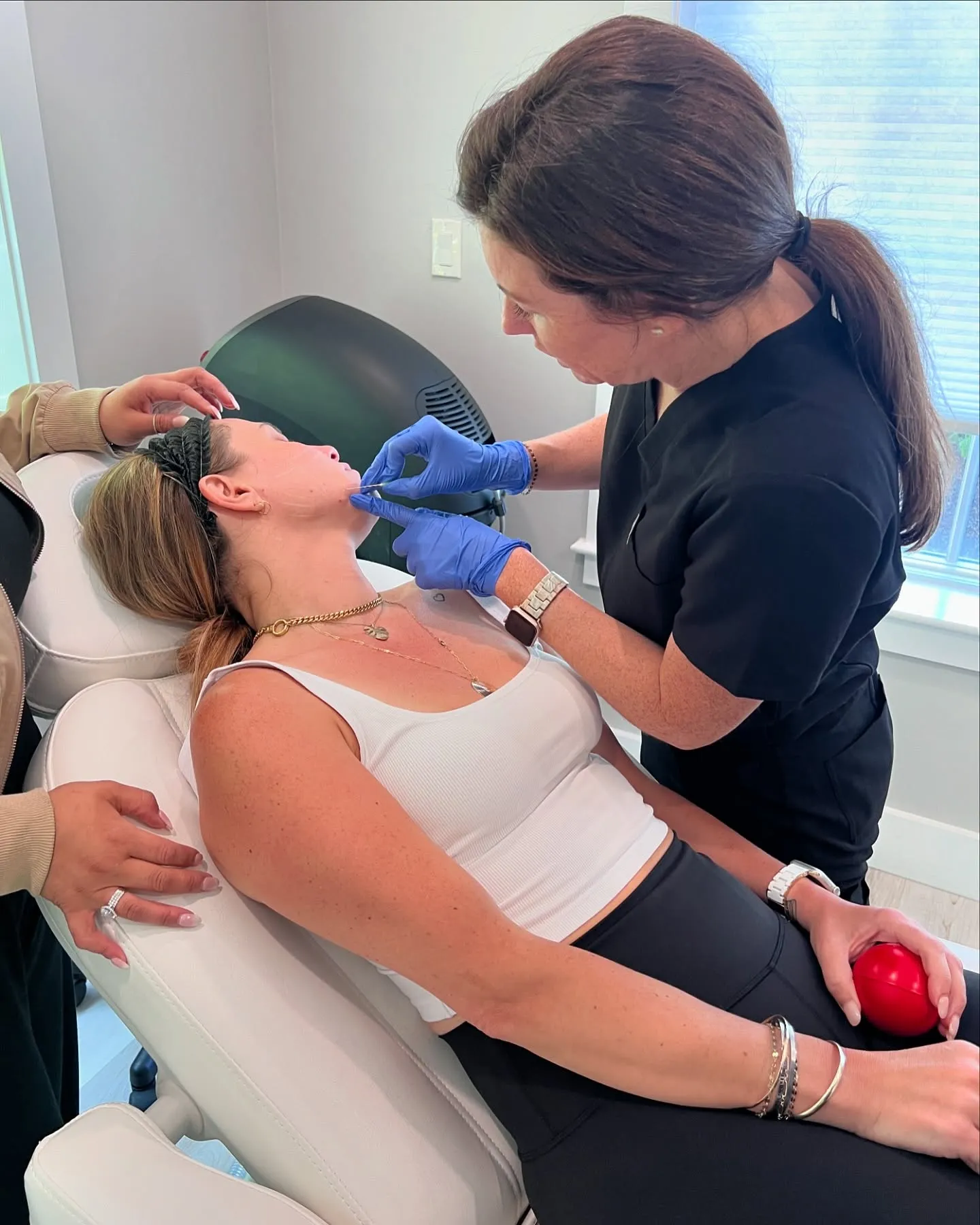
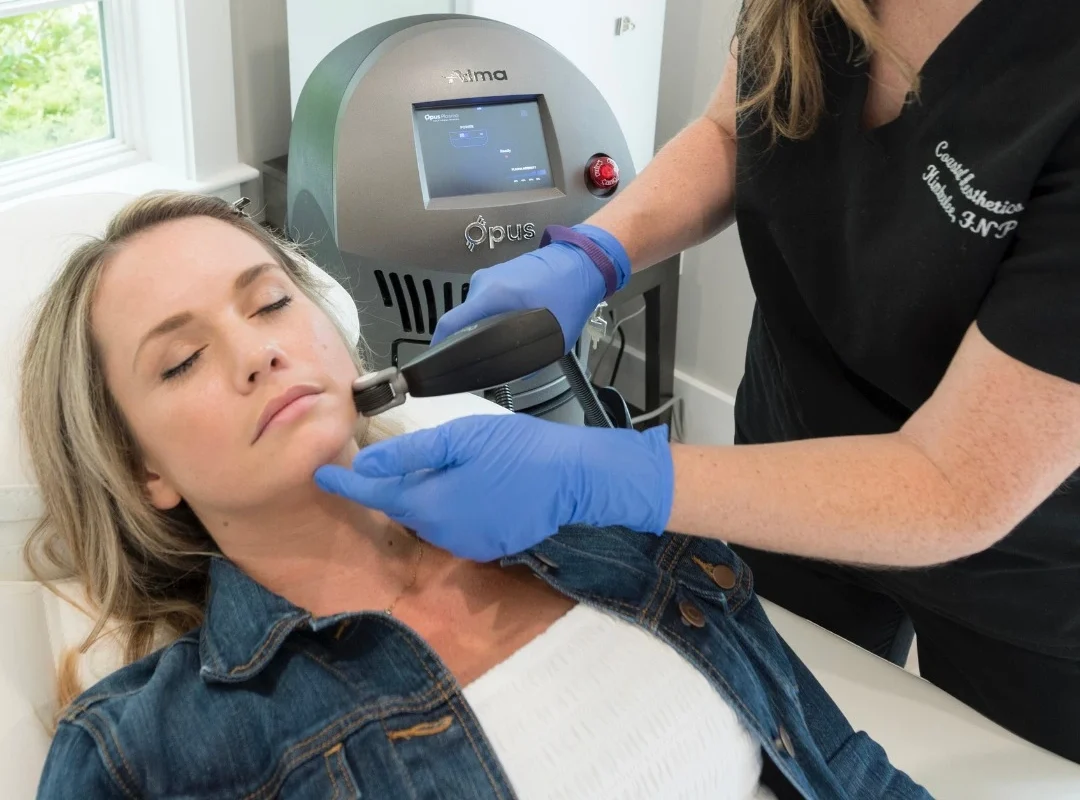
Every plan begins with a consultation covering your medical history and the areas you want to address. On treatment day, your provider applies a coupling gel to clean skin and moves the handpiece across the area in a series of controlled passes. Most patients describe the sensation as a deep warmth, interrupted by quick bursts of cooling from the cryogen system. Facial treatments generally take between 30 and 60 minutes. Recovery is minimal. Mild redness or warmth usually fades within a few hours, and most people return to normal activities the same day, makeup included. Because the skin surface stays intact, aftercare comes down to daily sun protection and a gentle routine for a day or two. Some tightening may be visible shortly after treatment as existing collagen contracts. The more meaningful change develops over roughly four to twelve weeks as new collagen and elastin form, and the deeper monopolar effect keeps building for several months beyond that.How often should you make a collagen deposit?
Treatment frequency depends on the area being treated and how much laxity is present at the start. Many patients begin with one or two sessions to establish a foundation, then shift to a maintenance rhythm of one DENSITY session per year, with the interval adjusted according to how their skin responds. The collagen you build stays in place, but the skin keeps aging around it, so regular deposits are what keep the balance moving in the right direction.What might a collagen banking calendar look like?
A patient in her late thirties with early jawline softening might complete two DENSITY sessions across the fall and spring, then settle into a single maintenance visit each year. Many Seacoast patients prefer to begin in the fall, once beach season ends and daily sun exposure drops. If texture or fine lines become a focus later, a resurfacing treatment can be layered into the plan without undoing the collagen work already in place.What protects the collagen you have banked?
Deposits only help if withdrawals stay under control. The habits that protect collagen are well established, and they carry as much weight as any in-office treatment:- Daily sun protection. A broad-spectrum sunscreen every morning, including overcast days along the Maine coast, limits the enzyme activity that breaks collagen down.
- A nightly retinoid. Vitamin A derivatives have a long track record of supporting collagen in the upper dermis.
- Fewer glycation triggers. Avoiding tobacco and limiting added sugar both slow the stiffening and breakdown of existing fibers.
- Professional guidance. Medical-grade skincare matched to your skin type keeps the at-home side of the plan consistent.

Frequently asked questions
Many providers suggest the late twenties to mid-thirties, when collagen production has begun to slow and the skin still responds briskly to stimulation. Starting later still has real value, and for most people the right moment is when they first notice changes they would like to slow down.
Collagen banking works for men as well as women. Men tend to have a thicker dermis, yet they lose collagen through the same processes, and the jawline and neck are common DENSITY treatment areas for male patients at Coastal Aesthetics.
Oral collagen supplements supply amino acids to the body as a whole, and they can be a reasonable part of a wellness routine. Radiofrequency works differently, sending a direct heat signal to fibroblasts in a targeted area of the dermis. The two can coexist, though supplements on their own are unlikely to produce the visible tightening patients look for from DENSITY.
The collagen your skin builds after treatment is your own, and it persists. With consistent sun protection and skincare, visible improvement commonly lasts a year or longer, and an annual maintenance session keeps fresh collagen coming as natural aging continues.
Yes. Beyond the face and neck, DENSITY can treat the décolletage, upper arms, abdomen, knees and inner thighs, where laxity often appears as collagen declines.
Start building your collagen bank at Coastal Aesthetics
Collagen banking rewards patients who plan ahead. The decline is gradual and largely invisible for years, which is precisely why well-timed deposits make such a difference by the point it would otherwise start to show. DENSITY RF suits that strategy because it stimulates collagen at two depths in a single visit and asks nothing of your calendar afterward. Kimberlee Smith, NP leads care at Coastal Aesthetics as an Alma Lasers faculty member and national educator, and every treatment plan is built around the individual patient. People travel from across southern Maine and from Portsmouth, NH for that level of attention. Schedule your consultation to map out a collagen banking plan for your skin, or book your appointment when you are ready to make your first deposit.References
Varani J, Dame MK, Rittie L, Fligiel SE, Kang S, Fisher GJ, Voorhees JJ. Decreased collagen production in chronologically aged skin: roles of age-dependent alteration in fibroblast function and defective mechanical stimulation. American Journal of Pathology. 2006;168(6):1861-1868. Oh S, Rho NK, Byun KA, et al. Combined treatment of monopolar and bipolar radiofrequency increases skin elasticity by decreasing the accumulation of advanced glycated end products in aged animal skin. International Journal of Molecular Sciences. 2022;23(6):2993. Veltri N, Frank M, Richter M, Banionis S, Bifulco J, Kumar N. Real-world evaluation of sequential monopolar-bipolar RF device for rejuvenation. Journal of Cosmetic Dermatology. 2026;25(2):e70687.
Services Pricing Guide
Download our exclusive Coastal Aesthetics Pricing Guide and learn more about our service menu and pricing